
Business operations
Create a Missed-Call Follow-Up Process for a Small Service Team
Assign ownership, preserve context and close the loop without duplicate callbacks.
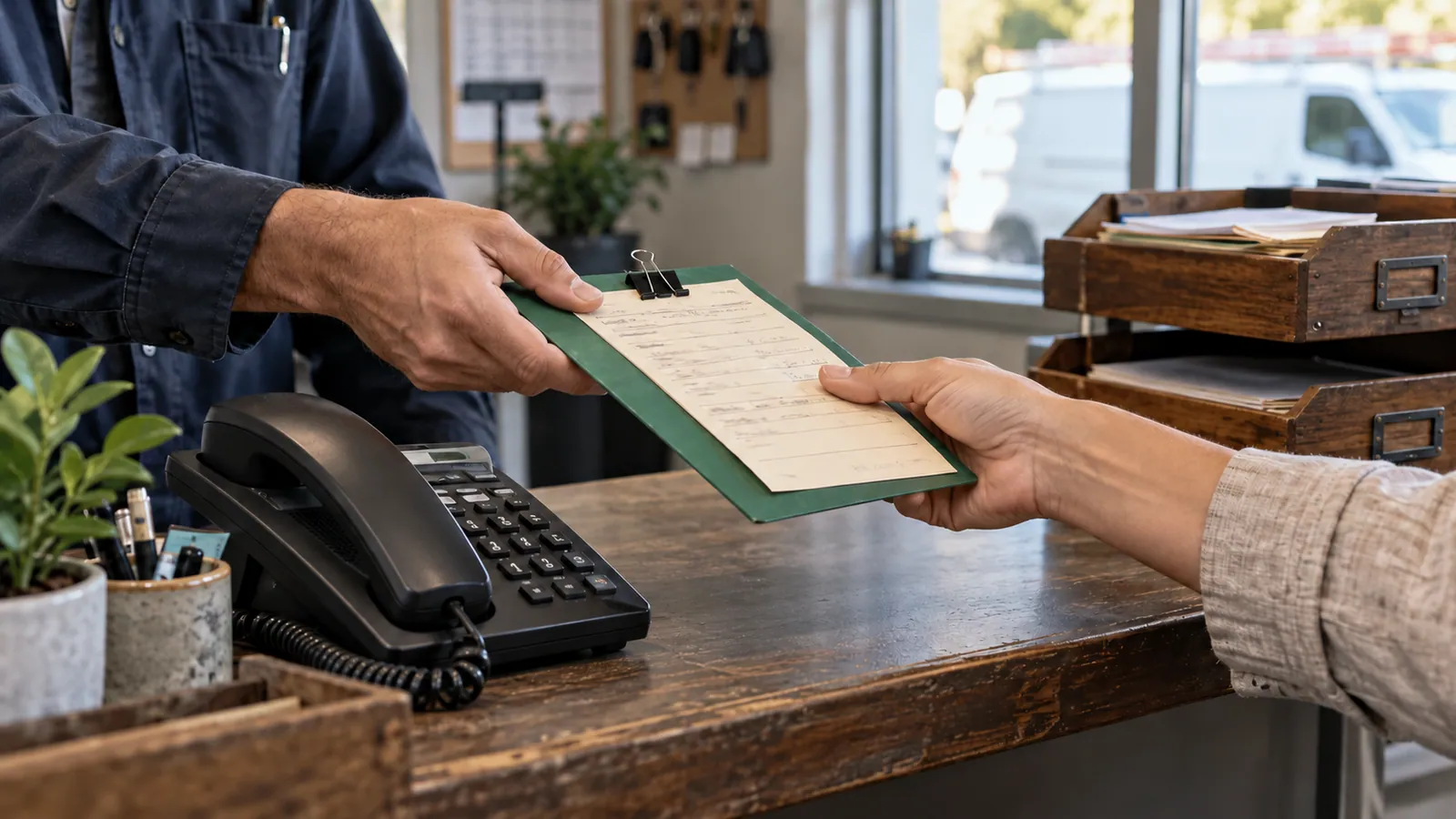
Put missed calls in one queue
A phone log tells you that a call happened; a follow-up queue tells you what to do next. Record the received time, caller number when available, voicemail summary, assigned teammate and next action. Restrict access to the people handling the request.
Before calling back, check whether the customer already reached another team member or has an open job. Link the call to that record instead of creating another independent lead.
Assign one accountable person
Choose who monitors the queue during each working period and who covers absences. Use a response target that matches staffing and customer expectations. Avoid publishing a speed promise the team cannot consistently support.
- New: nobody has reviewed the call.
- Assigned: a teammate owns the next action.
- Waiting: a response or information is needed.
- Closed: the request was handled or the outcome recorded.
Make the callback useful
Introduce the business, refer to the missed call and ask whether it is a convenient time. If there is a voicemail, acknowledge the specific issue. Confirm the next step and record it immediately after the conversation.
Review the queue at the end of the working period. Measure unresolved requests and repeated handoffs, not just the number of calls made. Remove stale personal information according to the business's retention policy. This workflow is an operational starting point, not a claim that every missed call represents a sale.
Keep exploring
Sources and editorial notes
Original practical checklist by Show Up Nearby. Examples are editorial recommendations; confirm job-specific conditions with the business. Sources checked September 7, 2026.
Illustrative photograph: RDNE Stock project, Pexels License. Does not identify a listed business.