
Reviews
What the FTC's Fake Review Rule Means for a Local Service Business
The federal rule on consumer reviews has applied since October 2024. Here is what it prohibits, how it meets Google's own policy, and a simple routine to stay on the right side of both.
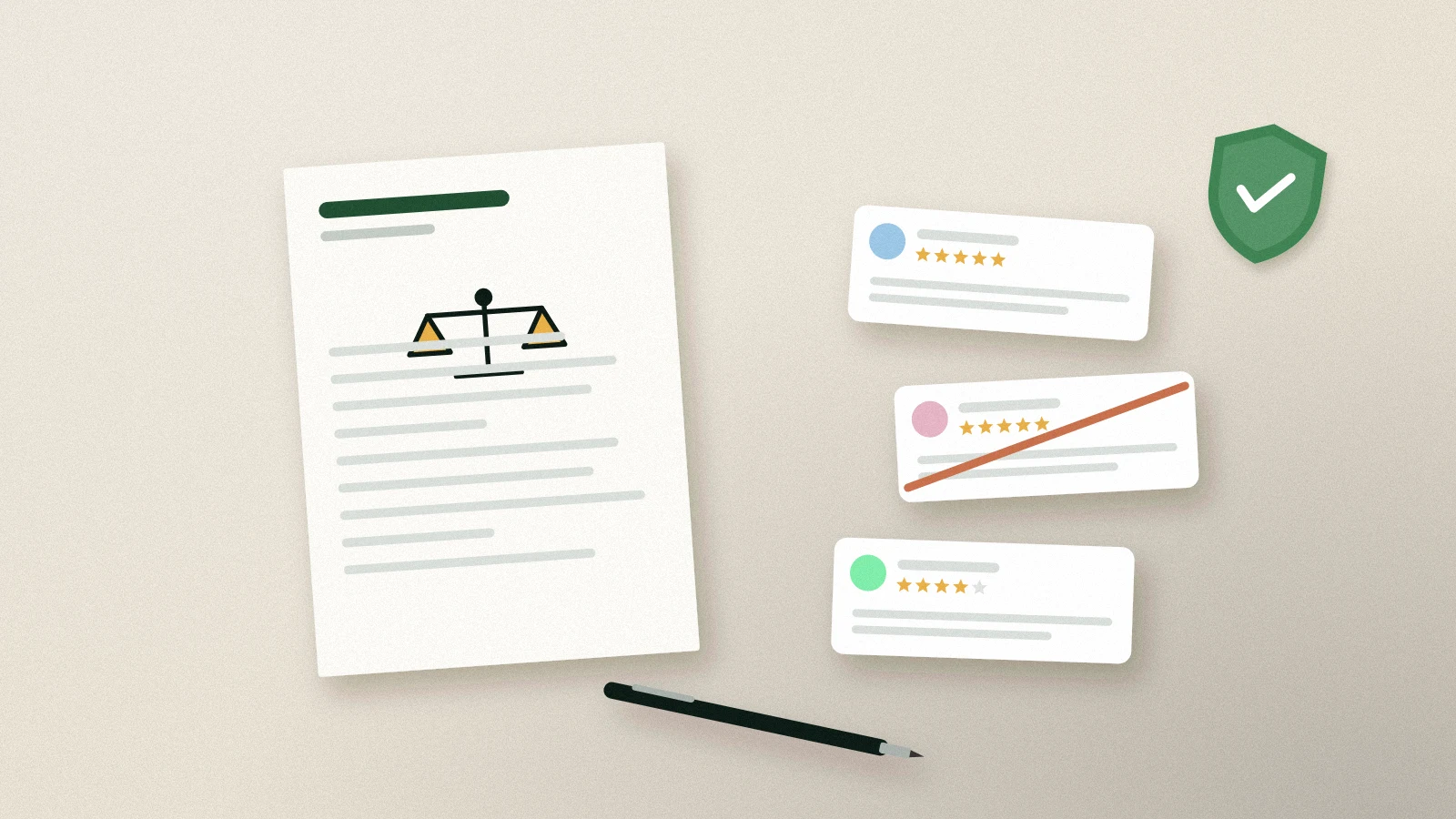
Since October 21, 2024, a Federal Trade Commission rule has specifically addressed fake and manipulated consumer reviews. Its formal name is the Trade Regulation Rule on the Use of Consumer Reviews and Testimonials, 16 CFR Part 465. The FTC says the rule authorizes courts to impose civil penalties for knowing violations. For a plumbing, roofing or cleaning company, most of it describes things an honest business would never do, but a few provisions catch ordinary habits.
This is general information, not legal advice. If a practice you rely on looks close to one of these lines, ask a lawyer.
What the rule prohibits
In plain terms, the rule covers six kinds of conduct:
- Fake reviews: writing, creating or selling reviews that misrepresent that the reviewer exists, that they used the service, or what their experience was. Buying reviews you should know are fake, or procuring fake ones from staff or their relatives, is covered too.
- Buying reviews with a required sentiment: offering anything of value in exchange for a review that must express a particular sentiment, positive or negative, whether that condition is stated or implied.
- Undisclosed insider reviews: reviews or testimonials by officers, managers or employees that do not clearly disclose the relationship, plus some situations where a manager asks relatives or staff for reviews without telling them to disclose it.
- Company-controlled "independent" review sites: presenting a site you control as an independent source of opinions about your category.
- Review suppression: using unfounded legal threats, physical threats, intimidation or public accusations you know are false or make with reckless disregard for the truth to stop a review or get one removed, and misrepresenting that the reviews shown on your own site are most or all of them when you are hiding reviews because they are negative.
- Fake social media influence: buying or selling fake followers or views to misrepresent importance for a commercial purpose.
Where ordinary businesses slip
The insider rule is the one most likely to surprise a small company. A crew member's spouse posting five stars, or an owner asking the whole team to "help us out with reviews," can create a problem when the relationship is not disclosed. The rule exempts generalized requests to customers, so asking every customer for honest feedback remains the right approach.
Incentives need care. The FTC's guidance says the rule does not prohibit incentives for reviews as long as there is no express or implied requirement about the sentiment, but it warns that failing to disclose the incentive could still violate the FTC Act. Google's own policy is stricter for its platform: it does not allow incentives such as payment, discounts or free services in exchange for reviews. Following the stricter rule keeps you safe on both fronts.
Review gating, meaning asking only happy customers, is not specifically prohibited by this rule, but the FTC says it could still violate the FTC Act, and Google's policy prohibits selectively soliciting positive reviews.
How it meets Google's policy
Google enforces its own fake engagement policy. When it finds a violation it can remove reviews and restrict the profile: blocking new reviews for a period, unpublishing existing reviews for a period, and showing customers a warning that fake reviews were removed. Google says it notifies the owner by email before a restriction and allows an appeal. Google's restriction policy.
A simple compliance routine
- Ask every customer after a completed job, using the same neutral wording.
- Do not offer anything in exchange for a Google review.
- Tell employees and relatives not to review the business, and never write reviews yourself.
- Respond to criticism with facts and a contact route, never with threats.
- If your website displays reviews, do not claim they are all of them when you have filtered out negative ones.
- Keep a short written policy and show it to anyone who handles reviews, including an agency.
Frequently asked questions
Can we offer a discount for any review, positive or negative?
The FTC rule does not ban incentives that do not depend on sentiment, but the FTC says an undisclosed incentive could still violate the FTC Act. Check each review site's own rules before offering anything. Google does not allow incentives for its reviews, so do not offer them for Google.
Can our technicians ask customers for reviews?
Yes. A request to the customer you served is a generalized solicitation, and it is the honest way to build reviews.
Can we remove negative reviews from our own website?
You can apply neutral rules equally to every review, such as removing abusive content or someone else's personal information. Hiding reviews because they are negative while presenting the rest as the full picture is the problem.
Sources and further reading
Keep exploring
- A policy-safe checklist for asking customers for Google reviews
- How to Respond to Negative Google Reviews
- When and How to Report a Google Review
Reviewed October 27, 2026. Practical examples are illustrative, not client results.